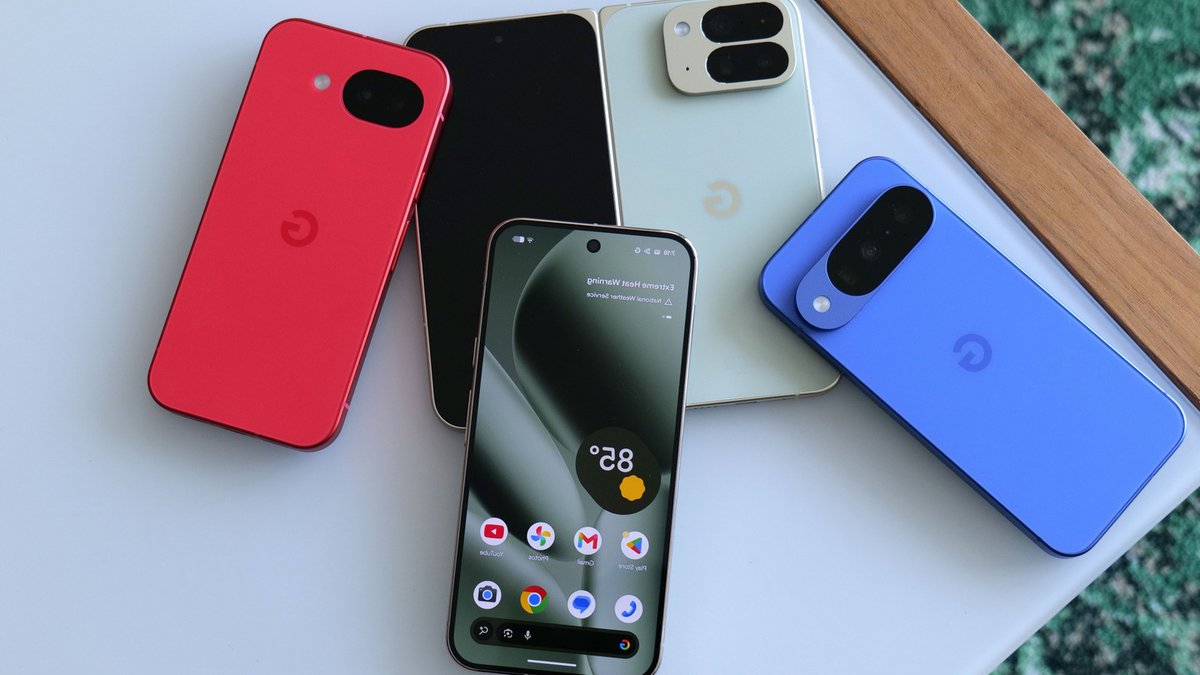
Google’s Pixel phones are sold in more than 30 countries, but the devices aren’t exactly the same everywhere. While the core hardware stays largely consistent, a few regional tweaks affect how the phones work and what users can expect.
Hardware largely identical, but a small SIM difference remains
Recent Pixel models, including the Pixel 10, Pixel 10 Pro and Pixel 10 Pro XL, share the Tensor G5 processor, 12 GB of RAM and storage options of 128 GB or 256 GB. The 6.3‑inch Actua OLED screen and a rear camera trio—48 MP main, 12 MP ultra‑wide and 10.8 MP telephoto—are the same across the board. Materials, color choices and overall design also match the US version.
The one notable hardware variation is the SIM slot. In the United States, the three flagship phones are eSIM‑only, a decision Google says reflects the “ease of use and widespread support for eSIMs among American carriers.” International versions keep a physical Nano‑SIM tray in addition to eSIM capability, freeing up space for mmWave 5G components. The Pixel 10 Pro Fold is the exception, offering a Nano‑SIM slot in every market.
The US market favors eSIM only.
Related: Why purple USB ports are rare in America
Software differences are mostly about timing and language
Google’s software rollout is generally uniform, but the company must adapt new features for local regulations and language support. This can delay the appearance of certain tools outside North America. For example, the AI‑driven “Magic Cue” feature, which highlights addresses and calendar entries in messages, is currently available in the United States, Canada, India, the United Kingdom, Japan and a few other regions. Google continues to work on expanding the feature to additional markets.
Because Pixels support over a dozen languages, the localization process can add weeks to a release schedule. Users in non‑English‑speaking countries may see a lag before the latest updates appear, though the underlying Android version remains the same.
Cellular compatibility is the biggest practical distinction
Carrier support varies widely, and that has a direct impact on the phone’s ability to connect to networks abroad. In the United States, carriers such as Verizon have heavily deployed mmWave 5G, which delivers very high speeds but works over short distances. International carriers tend to focus on mid‑band and sub‑6 GHz frequencies, which offer broader coverage at slightly lower peak rates.
Most overseas Pixel phones, therefore, do not include mmWave 5G hardware. This omission helps keep costs down and matches the expectations of markets where mmWave infrastructure is scarce. The difference can be significant for travelers who rely on the fastest 5G speeds in the United States but find their device limited to slower bands elsewhere.
Related: Akai Updates MPC One and Key 37 Workstations
Beyond frequency bands, the United States imposes stricter testing and certification requirements for devices sold through carrier channels. Those standards can affect which phones are officially available, a factor that explains why many Chinese‑made smartphones are not sold directly by US carriers.
What this means for buyers and movers
If you’re planning to relocate, the simplest approach is to purchase a Pixel in the country where you’ll live. This ensures the device’s SIM slot matches local carrier expectations and that any region‑specific software quirks are already addressed.
For most users, however, the differences are minor. The hardware specs, camera system and overall build quality remain consistent, and the software experience is largely the same once language and regulatory adjustments are complete. The main practical concern is whether the phone supports the cellular bands you need, especially if you expect to use mmWave 5G.
In short, while the Pixel line maintains a high degree of global uniformity, a few hardware and network variations persist. Those nuances are worth checking before buying a phone abroad, especially for travelers or expatriates who depend on reliable connectivity.


