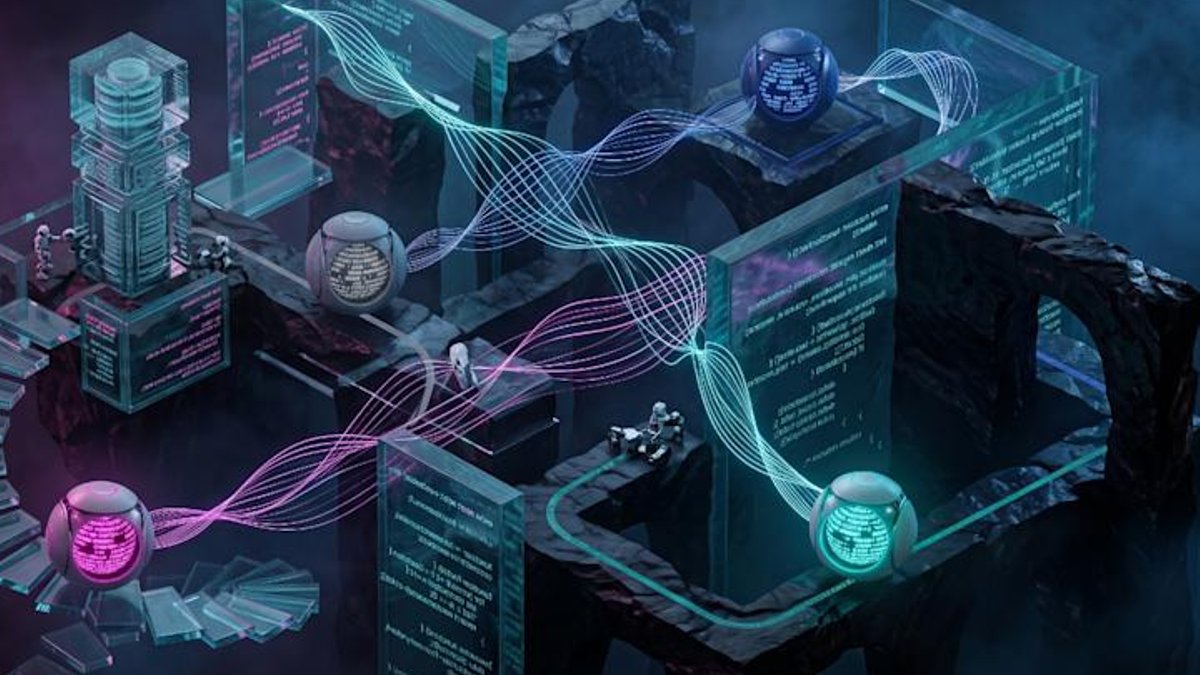
Four AI agents that coordinated in real time using the new AgentRadio system outperformed the latest Claude Opus 4.8 model on a demanding enterprise coding benchmark.
AgentRadio lets agents talk while they work
Researchers at Coral AI Labs and partner universities built the system as an asynchronous message‑passing layer that can be added to existing coding‑agent frameworks.
Related: Why Qwen and Opus 5 scores miss the cost mark
Benchmark results show a near‑doubling of success rates
On a benchmark of long‑horizon questions over production repositories, a team of agents powered by AgentRadio nearly doubled task accuracy for four Claude Code agents working independently. It also outmatched single agents running on more advanced models. For AI practitioners, AgentRadio shows that the right coordination structure can outmatch raw compute and model scale.
One concrete example involved a MinIO system where agents needed per‑request server logs. In a setup without asynchronous communication, two agents discovered the need for logs but could not share the insight until a final review, leading to a wrong answer. With AgentRadio, the discovery was broadcast immediately; a listening agent incorporated the new evidence on the fly, turning a failing result into a perfect score of 16 / 16.
The researchers note that the timing of information transfer proved decisive. “The team did not need another agent or another review round. It needed one agent’s discovery to reach the right peers before its operational value expired,” they said.
Related: Waymo’s Approach to AI Evaluation and Safety
From a broader perspective, the ability of AI agents to share intermediate results mirrors how human teams operate on complex software projects. As codebases grow, the bottleneck often isn’t raw processing power but the need to keep many moving parts aligned. By giving agents a channel to “listen” while they “talk,” AgentRadio offers a structural improvement that could make autonomous software engineering more reliable for enterprises.
Future work will have to address how agents decide which messages merit interruption and how to filter noise. The paper highlights cases where rapid sharing spread a mistaken hypothesis, indicating the need for smarter routing and conflict resolution. The researchers envision next‑generation systems that include adaptive responsibility assignment, evidence‑aware routing, and clear escalation paths for human oversight.


