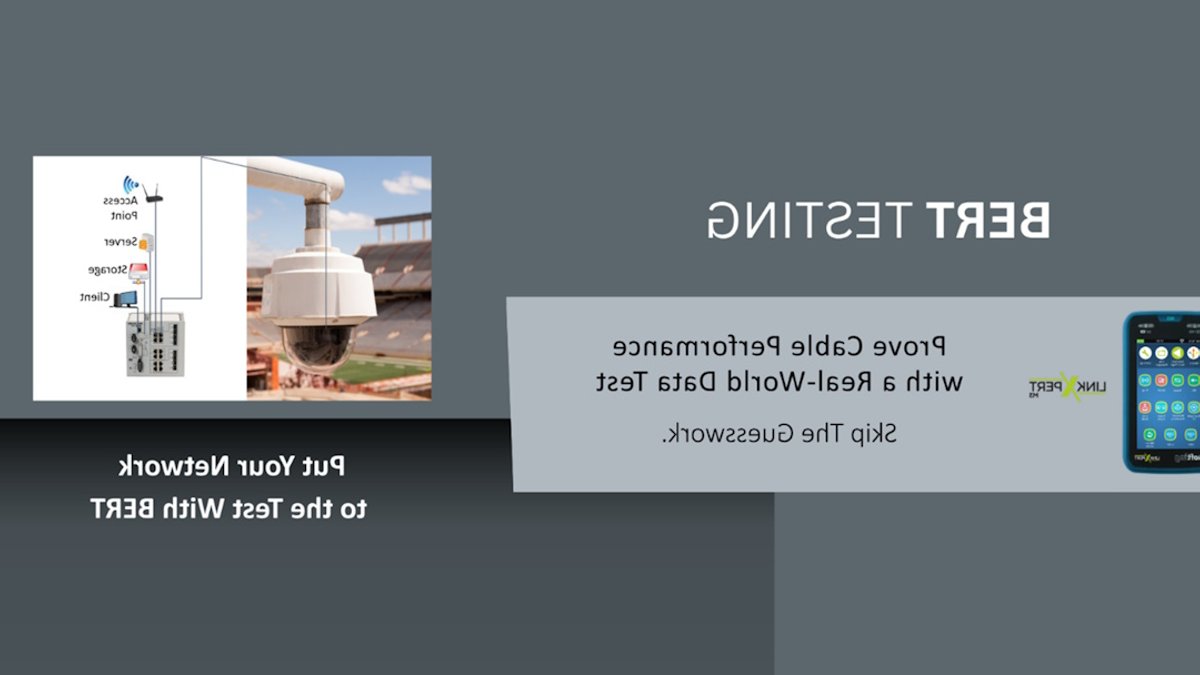
Network engineers looking to confirm that an Ethernet link will meet application demands can turn to BERT testing as a practical, low‑cost option that validates real‑world performance.
How BERT differs from traditional cable certification
Certification testing checks a cable’s specifications against Telecommunications Industry Association (TIA) standards and often requires expensive equipment and specialized training. It produces a snapshot of parameters such as frequency response, but it does not send actual data through the cable. By contrast, a Bit Error Rate Test (BERT) transmits Ethernet packets down the link, verifies checksums at the far end, and counts any bit errors.
Because BERT uses real traffic, it can be run while nearby machines start, stop, or move, revealing how environmental factors affect the cable. The test can also run continuously for long periods, offering a more realistic view of link reliability than a single certification pass.
Running a field BERT test
To perform a BERT, a technician connects a tester to each end of the cable and sends data at the target speed—often 10 Gbps for high‑bandwidth applications. Each packet includes a checksum; if the checksum returns zero at the receiving end, the bits arrived intact. The process is then repeated in reverse. Zero errors in both directions mean the cable passes the test.
Because the procedure simply involves sending and receiving data, it can be carried out by users with minimal training. The equipment costs are modest compared with the high‑end instruments needed for certification testing, and the test can be initiated quickly, much like “test‑driving” a vehicle.
In practice, this means that after a system integration or upgrade, the installer can run a 10 Gbps BERT while the system operates. If no bit errors appear, the network will support the required bandwidth throughout the entire cycle.
Related: Retro Rabbit SmarTek21 Launch SA UX Design Hub
The flexibility of BERT also extends to different cable types. Whether the link uses CAT 6A, CAT 5, or fiber, the test focuses solely on error‑free transmission, not on the cable’s internal specifications. This makes it useful for projects where the cable type is already selected but performance verification is still needed.
When certification testing remains relevant
Certification still has a role in new construction or when a project scope explicitly calls for it. Manufacturers may require certification to honor warranty agreements, and building codes can mandate compliance with TIA standards. In those scenarios, the certification test confirms that the cable meets the prescribed specifications, providing a baseline guarantee.
However, certification does not address how the cable behaves under real operational loads. It cannot monitor bit errors over time, nor can it assess the impact of nearby equipment. For environments where machines generate vibration, electromagnetic interference, or frequent motion, BERT offers a more direct assessment of whether the installed link will sustain performance.
Overall, BERT serves as a pragmatic alternative when continuous verification is needed, especially in applications that involve system integration, upgrades, or additions to existing infrastructure.
For many installers, the appeal of BERT lies in its simplicity and relevance. The test can be started, left to run, and the results reviewed without extensive setup, allowing teams to focus on delivering reliable service rather than interpreting complex measurement data.
Looking ahead, the ability to test at machine speed will become increasingly important as networks handle larger data streams. Future tools may combine error‑rate testing with automated alerts, further reducing the need for manual checks and keeping networks resilient under ever‑growing loads.


