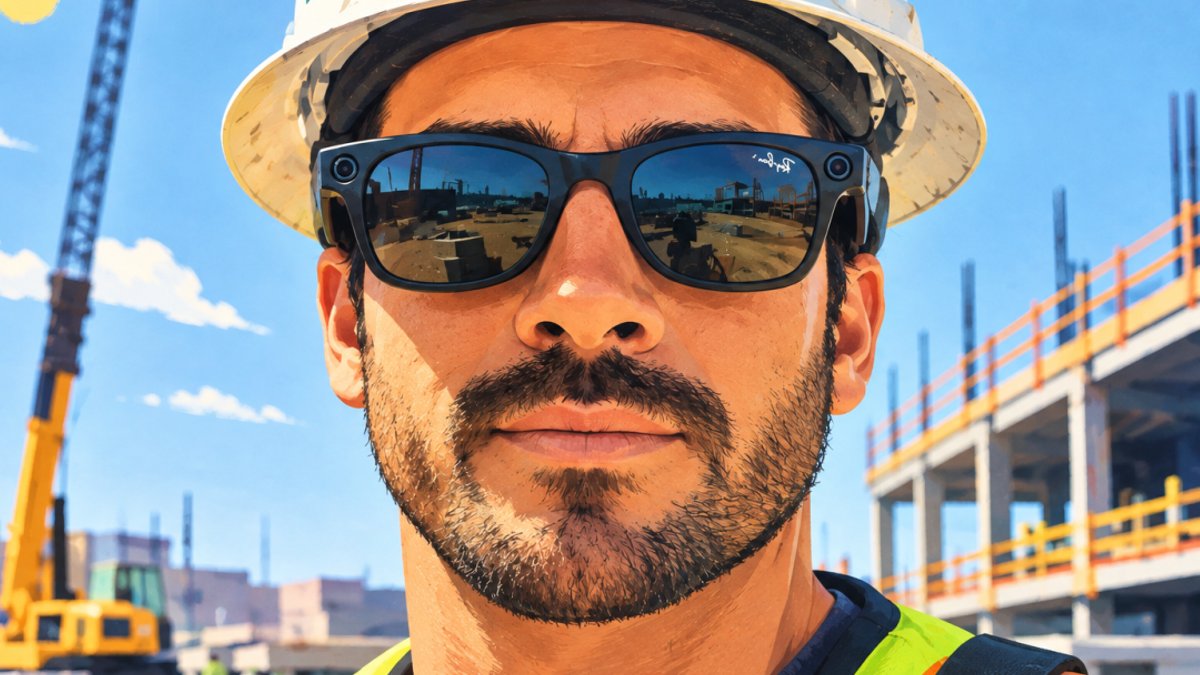
Eric Wu, the founder of real estate startup Opendoor, has returned to building companies after a year-long pause. His latest venture, NavigateAI, launched in May with a focus on solving the construction industry’s labor shortage using AI-powered tools for field workers. The company aims to act as a hands-free expert assistant, helping workers verify installations, check compliance, and troubleshoot issues in real time. Wu’s decision reflects a broader conviction that AI will define the next technological era—one he told me earlier this summer he would likely regret not engaging with if he didn’t act now.
Construction labor shortage hits record high
The construction industry faces a severe labor gap. According to the trade group Associated Builders and Contractors, the sector needs an additional 349,000 workers this year just to meet demand. The shortage is worsening due to an aging workforce, stricter immigration policies reducing foreign labor, and a surge in large-scale projects—particularly data centers.
Meta’s Hyperion campus in Louisiana, for example, requires 5,000 construction workers, while OpenAI’s Stargate site in Texas employed 6,400 at its peak. Staffing shortages now rank as a critical constraint for 90% of data center operators, according to Kelly, a global staffing firm. Where once a major data center project might have needed around 750 workers at its peak, today’s mega-projects demand workforce levels tenfold or greater, exacerbating the crisis.
NavigateAI’s core product runs on smartphones and, in hands-free mode, through Meta’s AI glasses. Workers can point their device at a task—whether checking torque, verifying code compliance, or confirming proper installation, and receive real-time guidance. The system pulls from building specs, manufacturer manuals, and company policies. Wu emphasizes that the hands-free experience is safer and more practical than using a phone on-site. The company is also working with Meta to get the glasses certified for environments where protective eyewear is mandatory, addressing a key safety concern for workers in industrial settings.
Beyond hardware, NavigateAI is partnering with AIM, a Meta-backed trade school for fiber installation, to integrate AI tools into worker training. Early adoption shows generational divides: younger workers adopt the technology, while experienced journeymen, often those with decades of hands-on expertise, remain skeptical. Wu acknowledges that resistance from veteran workers could slow adoption, as their institutional knowledge is critical for refining the AI’s accuracy. The challenge extends beyond training; even with structured programs like AIM, replacing the subtle experience of seasoned workers remains an unresolved hurdle.
AI pricing ties savings to real results
On the business model, the company started with a token-plus-margin pricing structure, akin to usage-based SaaS, but it has migrated its newer contracts to a share of value created. For instance, if NavigateAI helps a builder reduce a home’s construction cost from $300,000 to $280,000, the company captures roughly 20% of that $20,000 savings. Wu notes that Lennar, one of the largest homebuilders and an investor in NavigateAI, spends roughly $9 billion a year on labor, installation, and construction, so even a 5% to 10% improvement would represent hundreds of millions of dollars in potential value.
The long-term strategy hinges on data. Every job completed with NavigateAI generates labeled video footage of workers performing tasks correctly and incorrectly, a dataset Wu believes will be invaluable for robotics companies. However, this creates challenges. Attributing cost savings to the AI tool is difficult, as factors like weather, crew performance, and material availability can influence outcomes. Disputes over savings attribution could arise, even among investors, given the complexity of isolating the AI’s impact in real-world conditions.
Safety risks and legal gray areas remain
Safety and liability are additional concerns. If NavigateAI’s software approves a connection that later fails, who bears responsibility? Defect liability in construction is a legally fraught area, and it’s not yet clear how these issues will be handled as they invariably arise. Wu mentions that the most common current alternative is a worker Googling something or asking ChatGPT, and that NavigateAI can go well beyond that. However, the competitive question remains open. While Wu notes that the company’s defensibility rests on workflow integrations and proprietary data, the industry’s big players, including Meta, could theoretically build similar tools. Wu also mentions Buildots and OpenSpace as potential competitors.
NavigateAI raised $25 million in seed funding at a $225 million post-money valuation in late May, with backing from Elad Gil, Khosla Ventures, Lennar, and other investors tied to Wu’s prior ventures. The funding reflects confidence in his ability to scale AI solutions in labor-intensive industries.
Wu’s decision to return to building reflects a broader bet on AI’s transformative potential. After stepping back from Opendoor amid rising interest rates, he chose to double down on technology rather than shift to investing. The construction labor crisis presents a clear opportunity, but adoption will depend on overcoming skepticism from experienced workers and proving measurable value in a high-stakes industry.


