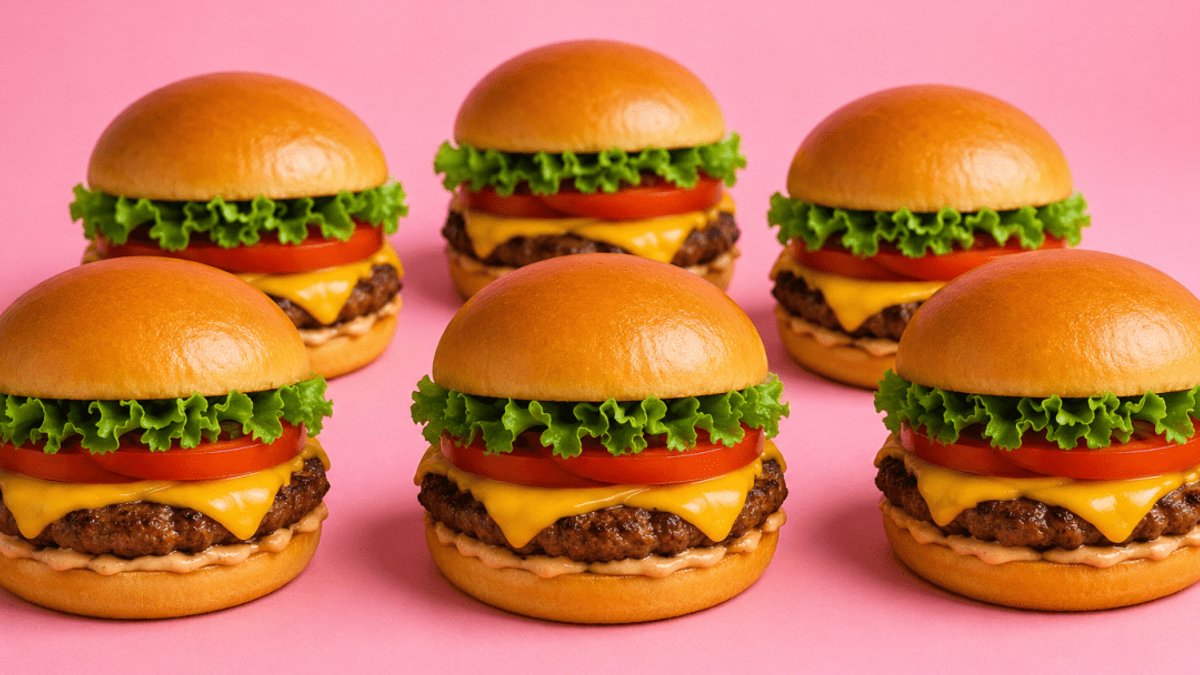
Customers visiting some cafes might find their lunch options look slightly off. The menu illustrations often feature bagel sandwiches with an eerily flawless, symmetrical appearance that feels unnatural. This is a side effect of AI-generated menus entering the restaurant business. The models behind these images are trained on a narrow, “pleasing” aesthetic that creates a specific look customers struggle to articulate but instinctively recognize as wrong.
AI models learn by analyzing vast datasets to predict what users want when they ask for a specific image. Reality Defender CTO Alex Lisle notes that a lot of this content mimics older, popular restaurant branding. The output often resembles a Chili’s menu from 2015 because that style was common in the training data.
Related: Nvidia, robots, and extinct animals headline Real World AI stage at Disrupt 2026
When AI-generated menus enter these training datasets, they reinforce the same visual style. This creates a feedback loop where the food imagery becomes increasingly homogenized. The optimization of these datasets focuses on being “pleasing” rather than accurate. This process tends to shave off the edges of reality, resulting in images that look smooth and generic rather than appetizing.
A shift in what we trust
There is a specific type of discomfort associated with these images. A user on X named Labtec demonstrated this by generating a menu in ChatGPT and editing it 100 times. With each edit, the food items became less distinct and more rounded. The final result looked like “hideous slop” and left the creator feeling uncomfortable. This effect mirrors what happens in the real world, where food photography often uses props and lighting to make dishes look better than they are. AI takes this concept to an extreme, smoothing out details until the image loses its authenticity.
Related: Create Custom HID Prox II ID Badges For Your Business To Improve Safety and Security
Lee Rainie, Director of the Imagining the Digital Future Center at Elon University, suggests that AI has a habit of removing the rough edges from its outputs. When people see these images, they often sense they are looking at artificial content. This reaction aligns with findings from researchers at the University of Duisburg-Essen in Germany. They found that AI-generated food images trigger an “uncanny valley” effect. This psychological phenomenon causes people to feel disgust or unease when they encounter images that look almost real but are not quite right.
Restaurants are likely revising AI-generated menus repeatedly, tweaking small details like prices or item names. Unfortunately, these edits tend to make the food images even more uniform. The problem extends beyond the dining experience. Alex Lisle points out that the ability to distinguish between real and artificial content is eroding. He compares this to the way our court systems rely on video and audio evidence, which is no longer a reliable standard in an era of deepfakes. This erosion of trust creates a significant challenge for the future of digital content verification.


