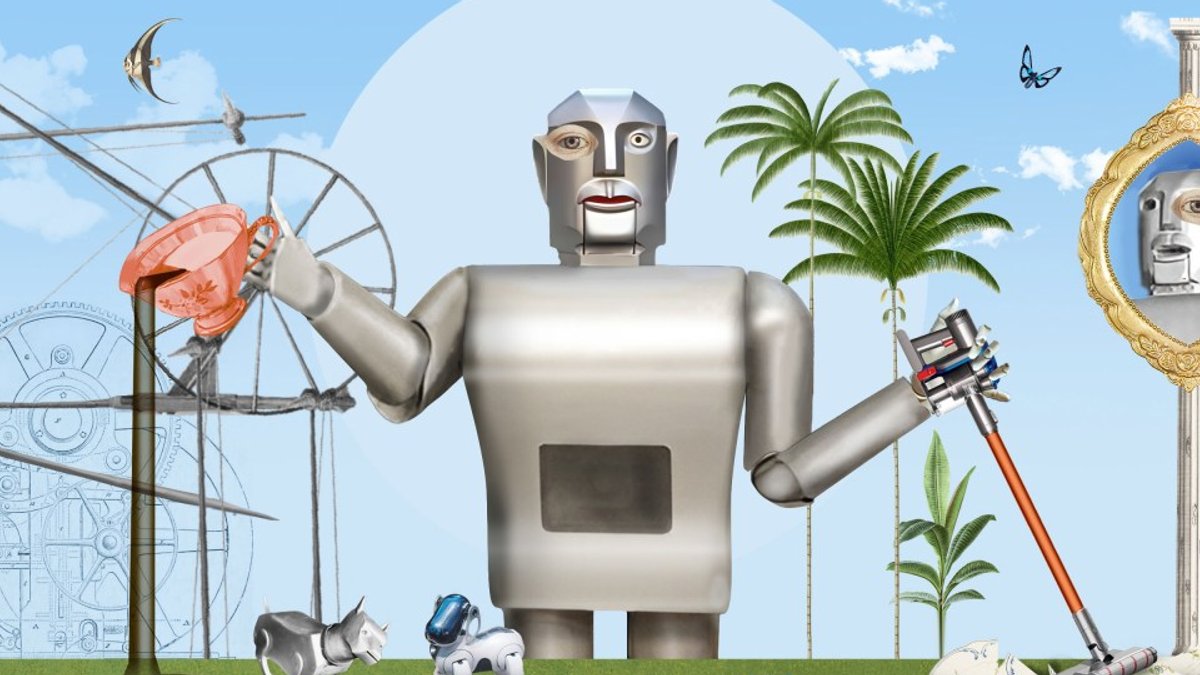
AI breakthroughs in robotics will not alter daily life in the near future. Optimus, Tesla’s white and black humanoid, is expected to cost about $20,000 and perform tasks like hauling sheet metal or folding laundry, with Musk predicting public sales by 2027. Even that timeline is optimistic given current limitations.
The hype versus reality
The robotics sector is full of bold claims. Marc Andreessen of Andreessen Horowitz has called robotics the “biggest industry in the history of the planet,” while Jensen Huang of Nvidia suggested humanoids will match human-level ability this year. Morgan Stanley projects nearly 1 billion human-like robots by 2050, creating a market worth more than $5 trillion. These projections depend on the belief that generative AI—similar to models powering ChatGPT and Claude—will let robots learn physical tasks the way chatbots learn language.
Many researchers dispute that assumption. Yann LeCun, one of the godfathers of AI, stated that none of the humanoid robot companies has any idea how to make those robots smart enough to be useful. Jonathan Hurst of Agility Robotics added that it is dramatically more difficult to build a machine that moves like a person than one that merely looks like one. The debate over whether these machines are near or far obscures slower, steady progress in labs across the country.
One reason for the disconnect is the way demos are staged. Getting a robot to put a plate in a microwave is one thing; getting it to survey a kitchen, identify ingredients, and cook a meal is another. Even Google DeepMind’s attempts to pack ingredients for a risotto have failed, highlighting the gap between simple actions and complex, multi-step workflows.
Robots have been around for decades, with figures like Leonardo da Vinci sketching mechanical knights in 1495 and WABOT-1 becoming the first full-scale humanoid in 1973. Honda’s ASIMO, while capable of climbing steps and recognizing faces, was discontinued in 2018 because it could not advance beyond demonstration-level performance. Today’s machines still face the same fundamental challenge: operating reliably in the real world without constant supervision.
Read Also: Study finds weight-loss drugs may slow biological aging
The reality of deployment
Humanoids have begun to appear in real-world environments, yet their capabilities remain narrowly defined. Agility Robotics has hundreds of units deployed in trials at facilities owned by GXO Logistics, Amazon, and Schaeffler. These machines focus on basic operations like moving bins and totes. Even for these limited tasks, development has taken years to ensure safety standards are met. Elon Musk claimed in May 2025 that thousands of Optimus units would work at Tesla factories by the end of that year. By January, however, he admitted that only a small number were performing simple tasks in the factory.
The leap to household use presents a steeper hurdle. The 1X Neo home robot is available for preorder at a price of $20,000. It promises to handle chores like putting away dishes or tidying a living room, but a remote human operator currently controls most of its actions. This requires permission to view the home through the robot’s cameras. Jonathan Hurst of Agility Robotics estimated it will take about a decade before robots can perform genuinely useful tasks in homes. He noted that current successes are often only 70 percent effective, which he considers insufficient for practical application.
Domestic automation is not the only frontier. China has established a lead in production volume. Nearly 90 percent of the roughly 15,000 humanoid robots shipped in 2025 were manufactured by Chinese companies. Unitree produced more units than any other firm and offers a model priced under $6,000. While these machines are expected to serve industrial applications first, the company anticipates consumer interest will grow. Market intelligence reports indicate that orders for these units currently come primarily from corporate and academic laboratories rather than the general public.
Historical precedents
The pursuit of artificial humans is a recurring theme in history. In the 20th century, Westinghouse introduced Elektro, a seven-foot-tall robot that smoked a cigarette at the 1939 New York World’s Fair. Waseda University in Japan created WABOT-1 in 1973, marking the first programmable humanoid. Honda unveiled ASIMO in 2000, a machine capable of climbing steps and recognizing faces. Despite these achievements, ASIMO was discontinued in 2018 due to a lack of utility beyond demonstration.


