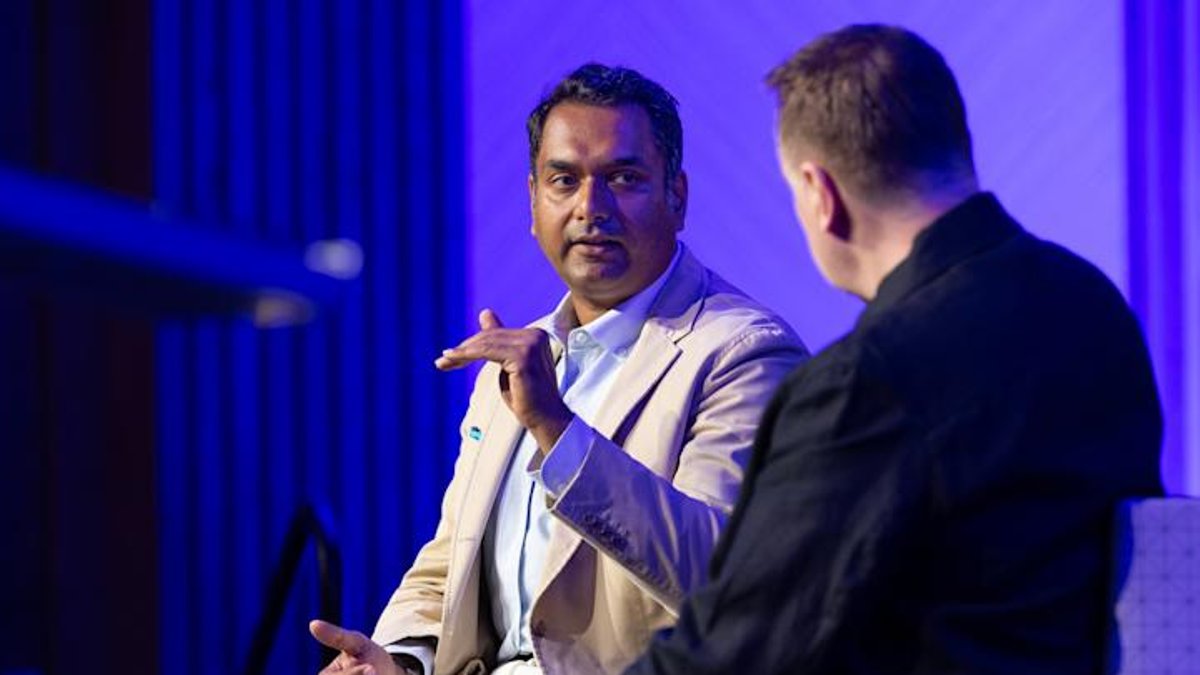
Asana’s chief product officer, Arnab Bose, discussed the challenges of building AI agents that can remember previous interactions and work alongside humans at VB Transform 2026. He introduced Agentic Work Management (AWM), a new operating system that treats AI agents as coachable teammates.
The system is built on top of Asana’s 18-year-old Work Graph, a graph-based database that organizes information through a structure called the Pyramid of Clarity. This graph provides a real-time ledger of who does what, by when, and why.
AWM leverages the Work Graph to create a multiplayer teammate, allowing the AI to view overarching company goals, update project statuses, and share memory with human colleagues. According to Bose, “Because the agent is plugged into the Work Graph, it’s not just looking at a particular prompt that you’re sending it or looking at a particular individual’s markdown file system on their local file, it’s working off of that shared ledger for the whole company.”
AWM is already in production, with several customers, including FedEx, using the system. Bose noted that Asana has solved several technical hurdles, including data governance and dynamic model routing, to ensure the system is secure and efficient.
One of the critical challenges Asana faced was ensuring that the AI teammate does not leak confidential information. Bose explained that the system must ensure the agent’s updated memory does not leak context to an unauthorized employee who interacts with the same agent later.
Related: Qwen3 processor surpasses top AI models
To address this issue, Asana engineered a system of access controls to govern what triggers the creation of a memory versus the simple execution of a task. This ensures that sensitive information is protected and only accessible to authorized personnel.
As Bose put it, “[I] shouldn’t be able to leverage that shared memory when I run the AI teammate if you created that memory using that same teammate on a project that is, let’s say, a secret M&A project that I don’t have access to.”
AWM targets a specific problem with current enterprise AI deployments: statelessness. Developers can easily connect large language models to enterprise tools, but basic chat-based agents lack persistence.
Bose detailed a scenario where a user asks a chat agent to draft a marketing campaign based on historical performance and competitive research. The agent fetches data from external tools to answer the prompt, but the execution happens in a vacuum, failing to create a reusable workflow for the next person building a similar campaign.
In contrast, AWM creates a permanent state, recording metadata when an AI teammate completes a task and registering whether the completion improved the project status and how it moved higher-level company goals.
Related: Google tests selfie videos for logins
This development is particularly significant for companies that rely on complex workflows and collaboration, as it enables them to create a shared company brain that can be leveraged by both human and AI teammates.
However, the dynamic gets complicated by the fact that the same frontier-model providers powering AWM under the hood — Anthropic, OpenAI — are also shipping their own competing agent products, which may expose companies to security risks.
Pressed on the overlap, Bose acknowledged the tension, stating, “I think that’s the reality that we all have to live in.”
His case for AWM‘s staying power rests on Asana’s 18 years of user-experience and workflow data, and prebuilt standard operating procedures for specific industries — expertise he argues raw frontier models don’t have.
As Bose noted, “There’s a big difference between the power of the model plus a lightweight way to demonstrate its value, and something that’s pre-built … for true end-to-end use.”


