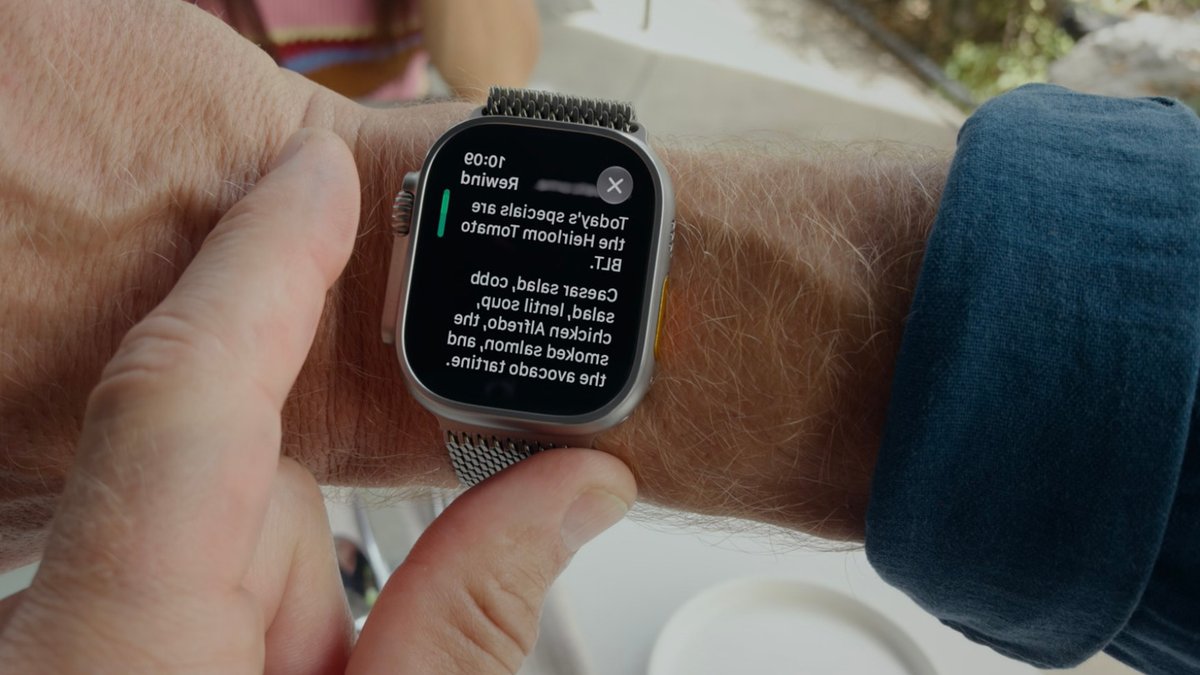
Smartwatch users are raising concerns about Apple’s new AI listening features for the upcoming Apple Watch Series 12 and Ultra 4, specifically Live Rewind and Siri Recap.
Auditing Past Conversations
During the September 9th special event, Apple introduced these tools designed to help users review recent interactions. Live Rewind allows a user to replay the last 15 seconds of audio from a conversation. Siri Recap takes a different approach by generating a text summary of that exchange. The company plans to release these features in beta later in 2026.
Apple has stated that the Live Rewind feature will play an audible chime when it begins recording and display a microphone icon. Siri Recap is designed to exclude sensitive information from its summaries. Apple also notes that the text snippets and summaries created with Siri Recap are end-to-end encrypted when they sync with iCloud. This encryption ensures that even Apple personnel cannot access the raw content of the user’s interactions.
Consent and the Public Space
Despite these technical controls, the social implications of a device that is always listening have sparked debate. The features are opt-in, and Apple says the raw audio used for processing is not accessible to the company and is deleted afterward. However, critics argue that opt-in consent in a shared environment is insufficient.
One user on Reddit questioned the validity of this approach. They asked, “Opt in for whom?” The user pointed out that even if an individual opts in, the device might record others nearby without their permission. This raises the question of whether Apple verifies consent from everyone within earshot of the smartwatch. Since the system is active and listening continuously, it captures ambient audio that includes the voices of people who have not consented to be part of the recording.
Read Also: iPhone 18 Pro Outshines Duo in Key Features
The concern extends beyond simple privacy to the social etiquette of the feature. Some users found the idea of a device constantly listening to conversations unsettling, describing it as borderline antisocial. Others noted that the feature might normalize the idea that technology is always listening to everyone, a feeling that is already common with smartphones and smart speakers. The normalization of pervasive listening could erode the expectation of privacy in both public and private gatherings.
The Reality of Voice Recognition
Current technology generally relies on wake words like “Hey Siri” or “Hey Google” to activate listening modes. The system then filters out background noise to prevent accidental recordings. Live Rewind and Siri Recap differ fundamentally from this model because they do not wait for a trigger. The system is designed to be active and ready to record.
Some users compared the new features to Live Translate, another AI-driven tool that listens and plays back audio. Reports on Live Translate have been mixed, with some users finding the functionality lacking. This comparison suggests that the new listening features may struggle to identify speakers accurately in a noisy or crowded environment. Distinguishing between multiple overlapping voices remains a significant technical hurdle for AI systems.
The Risk of Error
Beyond privacy, the practical utility of the features is uncertain due to the limitations of current artificial intelligence. AI systems are prone to “hallucinations,” where they generate incorrect or fabricated information. Apple has had to disable similar AI-powered features in the past due to incorrect summarization.
The system must accurately distinguish between speakers to create a useful transcript. If the AI misidentifies voices or misunderstands context, the summaries provided by Siri Recap could be misleading. This risk increases in public settings where multiple people are speaking at once. A transcript could attribute a quote to the wrong person, leading to potential misunderstandings or misrepresentations of what was actually said.
