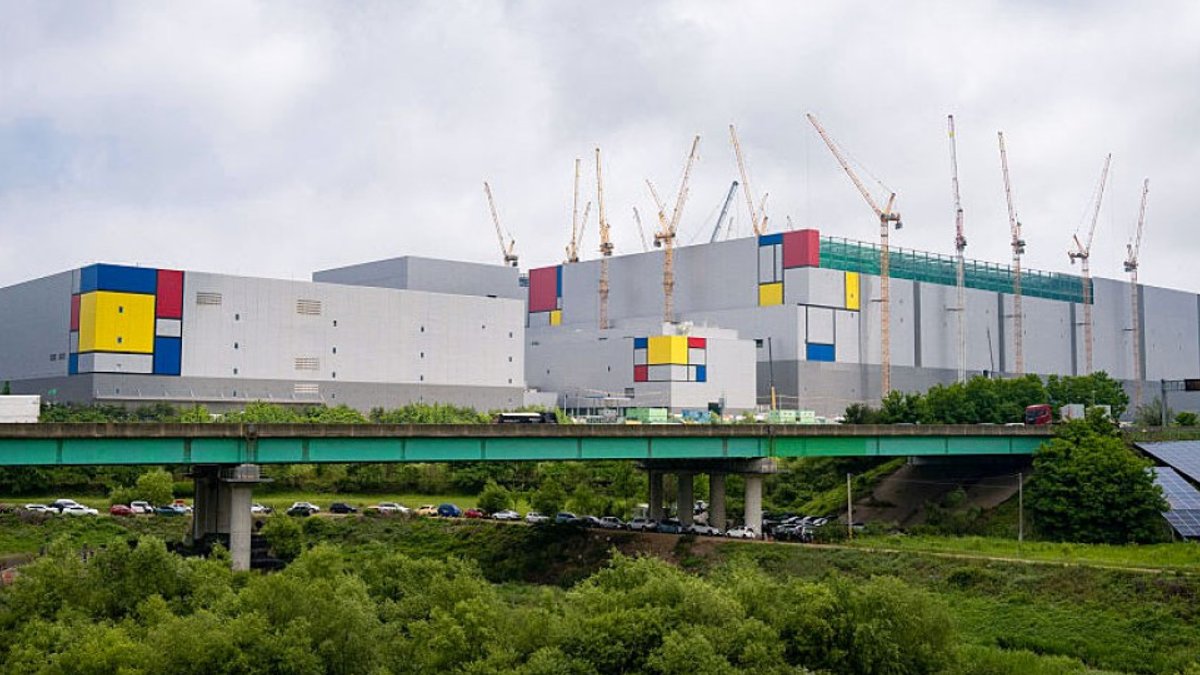
Advanced generative-AI systems depend on high-performance GPUs, which in turn require layers of specialized memory chips integrated with the processor. To satisfy the rising appetite for such memory, Samsung is erecting a vast new semiconductor manufacturing site in Pyeongtaek, South Korea. Currently, three fabrication plants operate nonstop, a fourth is about to become operational, and a fifth, paused in 2024 when memory demand fell, has resumed construction as the AI surge reignites need.
A Campus the Size of Central Park
It is just before midday on a Monday when laborers stream out of Samsung’s factories in Pyeongtaek, a rural town south of Seoul where rice fields meet an extensive chip-making complex. Thousands of employees, clad completely in black attire with sky-blue safety vests, remove helmets that display their names and plant identifiers. They head to the cafeteria, perspiring and flushed, wearing bulky sneakers fitted with yellow toe protectors.
Read Also: New implant helps restore vision in patients
Some ride scooters or motorcycles to work through the grounds, which span an area comparable to New York City’s Central Park. Dining options include buffet halls, casual diners, and stews-specialty restaurants, while signage promoting short-term studio-apartment rentals lines the walkways. A number of workers also pause at real-estate desks, joining the same counters where Samsung’s salaried engineers purchase new residences.
Standing before the fourth fabrication unit, I encounter Choi Hye-rin, a 35-year-old safety supervisor, as she dabs sweat from her brow with a handkerchief. She had boarded an early-morning shuttle from Songtan, a more aged and modest district, to reach the site. Her responsibilities include overseeing the safety of a team that installs cable conduits, drafting inspection reports, examining equipment, and monitoring the chemicals handled by the crew. She is among hundreds of women employed on the premises, many serving as spotters who precede heavy machinery.
Urgency in the Work Zones
Safety receives considerable emphasis throughout the complex. After the midday break, building activities resume without delay. Excavators pass by rust-red steel frameworks that rise beneath towering cranes. Banners affixed to the highest girders proclaim, “Even if the work runs late, don’t rush.” A large LED display cycles through the winners of a poem-writing contest centered on safety. Helmets bearing the pledge, “I will not work if it’s not safe,” are mounted on lockers. The newly completed fabs shine brightly from the opposite street.
Read Also: Breakthrough in frozen pig kidneys and nuclear power boosts
Beyond the cautionary signage, a palpable sense of immediacy pervades the site. Samsung forecasts that the need for memory chips will keep climbing through 2028. For several years, the firm has watched its home-grown competitor SK Hynix pull ahead in the worldwide market for the high-bandwidth components that drive Nvidia’s AI accelerators. Expanding the Pyeongtaek facilities represents Samsung’s strategy to regain its position in the memory arena.
Even though temperatures soar and the work areas are densely populated, Hye-rin does not intend to quit. “The rate here is higher than other construction sites, and the work is relatively easy,” she states. She receives a daily wage of 140,000 won ($97) and believes the current boom will keep her occupied for the foreseeable future: “You just keep coming back.”


