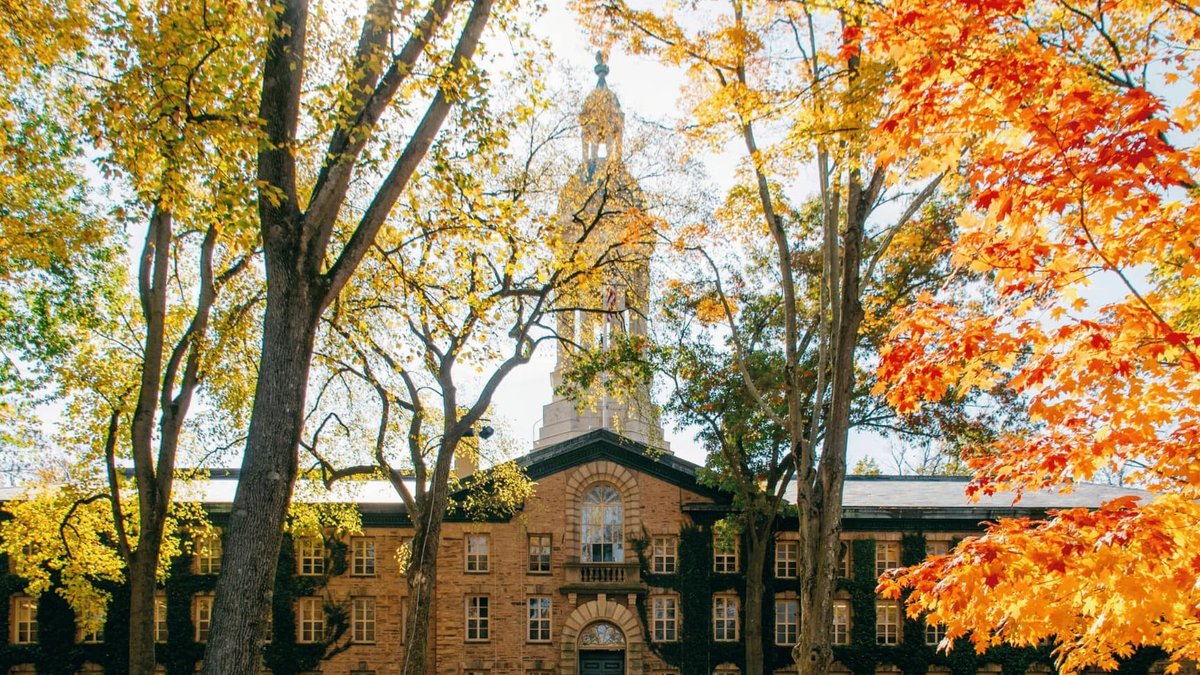
Princeton University has a long history dating back to 1746, ranking it as the fourth oldest institution of higher learning in the United States. The campus, located in New Jersey, is known for its Gothic architecture and academic prestige. Beyond the classroom, the university has built a strong ecosystem for innovation, connecting ambitious students with resources to turn ideas into businesses. The Keller Centre acts as the hub for this activity, running programs like the Tiger Challenge, which uses social innovation to help students solve societal problems. Another key resource is eLab, a summer accelerator that provides funding and mentorship to student startups, supported by the Alumni Entrepreneurs Fund.
The proximity to New York City allows many graduates to stay close to the university while building companies on Wall Street. This geographic link helps bridge the gap between academic theory and commercial application. It creates a network where students can find guidance from alumni who have already worked through the startup terrain. The result is a steady stream of graduates who go on to start companies in various sectors, including fintech, media, and e-commerce.
Alumni Ventures
Jeff Bezos, a Princeton graduate of 1986, founded Amazon after working in finance. He started the company in 1994 in a Seattle garage, originally selling books online. What began as an online bookstore has grown into one of the world’s most valuable companies. Bezos stepped down as CEO in recent years to focus on other projects like Blue Origin and The Washington Post.
Meg Whitman, who attended Princeton as an undergraduate, helped shape eBay into a global marketplace. After earning a degree from Harvard Business School, she led the company for a decade before taking it public. Her career continued with roles at Hewlett-Packard and a brief stint as the U.S. ambassador to Kenya.
Eric Schmidt, another Princeton alumnus, studied electrical engineering before earning his PhD. He served as the chief technology officer at Sun Microsystems and later became the CEO of Novell. For ten years, he led Google, guiding the company into its role as a global technology giant. Today, Schmidt runs Schmidt Futures, an organization focused on investing in talent and science policy.
Lisa Sugar studied psychology at Princeton and launched PopSugar in 2005. She started the lifestyle media company from her apartment, covering celebrity culture and fashion. Her husband, Brian Sugar, joined the venture, and they built a business that eventually merged with Group Nine Media. PopSugar remains a major property in the women’s lifestyle sector.
Wendy Kopp founded Teach For America based on a senior thesis project during her time at Princeton. The organization recruits recent college graduates to teach in under-resourced schools. Since its launch in 1990, it has placed tens of thousands of teachers in classrooms across the country. Kopp also oversees Teach For All, a global movement that has expanded her original concept internationally.
Related Post: Benin, Ghana, Rwanda test cross-border digital ID system
Modern healthcare has been shaped by Princeton alumni like Zacharia Reitano. He co-founded Ro, a direct-to-consumer telehealth company that began by selling erectile dysfunction treatments online. The company expanded into weight loss and fertility care, raising significant venture capital during the pandemic. Ro has become a prominent player in the online health space.
Scott McNealy, who graduated from Princeton in the late 1970s, co-founded Sun Microsystems in 1982. The company played a central role in the Internet boom, developing servers and software that powered early websites. Sun was also responsible for creating Java, a programming language still widely used today. McNealy served as the company’s CEO for over twenty years.
John Katzman launched The Princeton Review from his dorm room in 1981. The test preparation company eventually went public before he sold it. He later co-founded 2U, which pioneered online degree programs with major universities. His career includes another venture, Noodle, which operates in the education technology sector. Katzman has built three separate companies over the past three decades.
Other Notable Figures
The university has also produced leaders in other fields. Shirley Tilghman served as the university’s president from 2001 to 2013. She was the first woman to lead the institution. Her tenure focused on expanding the campus and increasing research funding. Before becoming president, she was a prominent geneticist.
Notable Alumni Entrepreneurial Successes
Princeton has produced a wide range of entrepreneurs who built companies across various sectors. Some alumni have focused on fintech, media, e-commerce, and the software that maintains the Internet. Others have taken different paths to success, leveraging their education to create businesses that span decades.
Academic and Scientific Impact
Faculty members have also made significant contributions to science. Albert Einstein spent his final years at the Institute for Advanced Study, which is located near the campus. He worked there from 1933 until his death in 1955. His work on general relativity fundamentally changed our understanding of the universe.
Other faculty members have won the Nobel Prize. In chemistry, the list includes Edwin Schloegl, Harold Varmus, and Ferid Murad. In physics, the winners include Steven Weinberg and Philip Anderson. The Fields Medal, awarded for mathematical achievement, has gone to Princeton faculty members like Manjul Bhargava.


