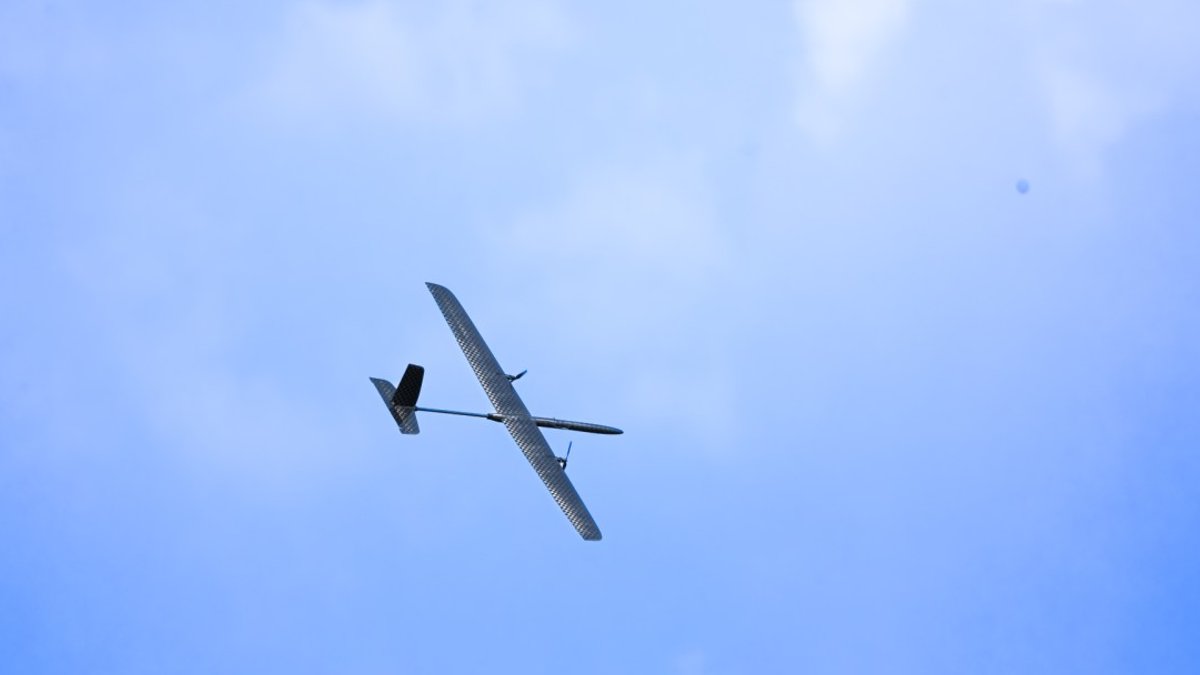
Lachy Groom has put $2.5 million into Bengaluru‑based startup Alteon, aiming to keep a small plane aloft for more than a year by harvesting energy from ocean breezes.
Funding and early backing
The pre‑seed round was led by Groom, with Together Fund also contributing. Groom said he decided he wanted to invest within the first half hour of their first meeting, a sign of his confidence in founder Samay Sanghvi.
Sanghvi began working on what would become Alteon straight out of high school in 2023, learning to build aircraft by making — and crashing — radio‑controlled models before developing early prototypes.
How the low‑altitude vehicle harvests energy
Alteon’s design relies on dynamic soaring, a method albatrosses use to extract power from air currents that move at different speeds. The craft glides close to the water, climbs into faster layers, then turns back down, repeating the cycle to gain lift.
Related: Liux bets sustainability with microcar against Chinese rivals
Conventional planes must carry fuel or batteries for the entire trip. By converting propeller motion into electricity, the prototype hopes to recharge its onboard cells while still in flight, extending endurance without refueling.
The vehicle’s wing span measures roughly three metres, a size chosen to balance structural strength with the ability to operate within the thin shear layer just above the sea. Its propellers are intended to double as turbines, spinning in the faster airstream to generate electrical power that feeds directly into the battery pack. Eventually, Alteon plans to use its propellers as turbines to convert some of that energy into electricity and recharge its onboard batteries.
Alteon envisions the platform initially serving maritime surveillance roles, offering governments a persistent eye over coastal waters and exclusive economic zones. Continuous presence would enable real‑time monitoring of vessel traffic, illegal fishing, and environmental changes, unlocking capabilities that current short‑duration drones cannot provide.
Dr. Bharath Swaminathan, who completed a doctorate at IIT Madras studying the stability of dynamic soaring, affirmed that the underlying physics is well documented. He praised the team’s ambition while cautioning that local turbulence and rapidly shifting wind shear can differ dramatically from the broader patterns that models predict, meaning that field validation remains essential.